

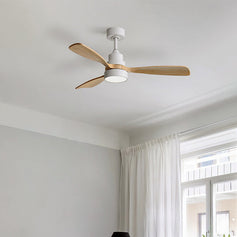
Ceiling Fans With or Without Lights: Which Should You Choose?

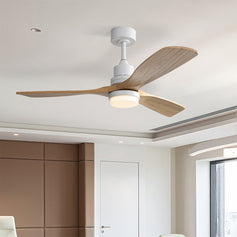
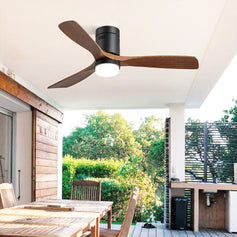
Choose a ceiling fan with light when you need lighting at the fan’s position. Choose a ceiling fan without light when existing fixtures already provide the illumination you need.
Both types can offer remote control, adjustable speeds and other comfort functions. Check these features separately from the lighting option.
1. When a Ceiling Fan With Light Makes Sense
Combining airflow and lighting can be useful when replacing a central ceiling light, furnishing a compact room or keeping the ceiling visually simple.

Check the lighting specifications:
- Brightness: compare light output in lumens. Wattage describes power consumption, not brightness.
- Dimming: check whether brightness is adjustable and how low it can go.
- Colour temperature: check the available settings in kelvin (K). Adjustable white tones and dimming are separate functions.
- Independent operation: confirm that the fan can run with the light off, and the light can work with the fan off.
- Memory: check which brightness and colour settings return after remote or wall-switch operation.
A central fan light may still need support from reading lamps or task lighting. Consider the room’s area, layout and how you use each part of it.
2. When a Ceiling Fan Without Light Makes Sense
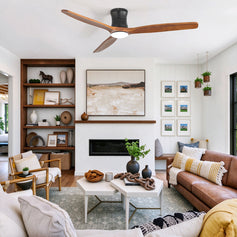
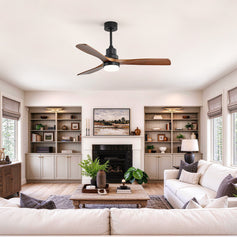
A no-light fan suits rooms already served by ceiling spots, wall lights, floor lamps or other planned lighting. It lets you position airflow around the occupied area while arranging lighting separately.

This can be useful in living rooms, dining areas and bedrooms with layered lighting. Keep nearby light fittings outside the blade sweep and maintain the manufacturer’s required clearances.
The absence of a light does not establish better airflow, lower noise or lower motor consumption. Compare those specifications directly.
3. With Light vs Without Light: Key Differences
Compare the lighting, controls, installed dimensions and maintenance needs of each option.
| Aspetto | Ventilatore da soffitto con luce | Ventilatore da soffitto senza luce |
|---|---|---|
| Illuminazione | Aggiunge una luce nel punto di installazione del ventilatore. | Utilizza un’illuminazione separata nella stanza. |
| Comandi | Verificare il controllo indipendente di ventilatore e luce. | Verificare i comandi del ventilatore e dell’illuminazione esistente. |
| Altezza installata | Includere la lampada nell’ingombro verticale totale dal soffitto. | Verificare le dimensioni complete dopo l’installazione. |
| Manutenzione | Verificare la possibilità di sostituire la lampadina o il modulo LED. | Eseguire separatamente la manutenzione del ventilatore e dell’illuminazione. |
4. Check the Comfort and Control Functions
Lighting is only one part of the decision. For either type, review:
- Motor and speeds: DC or AC motor, speed range and gentle low-speed operation.
- Airflow and noise: airflow in m³/h and measured noise in dB(A), with the operating speed stated.
- Remote control: included functions, operating range and whether multiple fans can be paired separately.
- Summer and winter modes: reversible airflow for a summer breeze and gentle winter air circulation.
- Timer: available shut-off times and whether the timer affects the fan, light or both.
- Sleep and breeze modes: automatic speed changes, where offered.
- App and voice control: supported apps, network requirements and Alexa or Google Assistant compatibility, where offered.
- Setting memory: which fan and light settings are retained after power is switched off.

For night-time use, check low-speed noise, remote confirmation sounds and indicator lights. A remote-controlled fan may require the wall supply to remain on.
Use wall switches and dimmers only as specified by the manufacturer. A dimmable fan light does not automatically make the complete fan compatible with an existing wall dimmer.
5. Check Fit and Energy Use
Match fan diameter in cm to the room’s area in m² and airflow requirements. Check the assembled height, blade clearance and mounting suitability for flat or sloped ceilings.
Compare motor power and light power separately in W. For a no-light fan, include the electricity used by your separate room lighting when assessing total use.
6. Maintenance and Future Changes
For integrated LED lighting, check replacement-module availability and the replacement procedure. Add or remove a light kit only when the specific fan supports it; light kits are not universally interchangeable.
Before installation, confirm structural support, suitable fixings and electrical compatibility. For covered outdoor locations, verify the manufacturer’s location approval and appropriate IP rating.


