

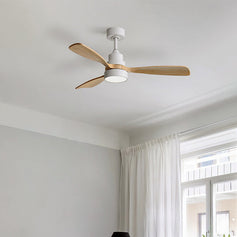
How to Choose a Quiet Ceiling Fan for Comfortable Sleep

A comfortable bedroom fan combines gentle airflow, low operating noise, stable installation and simple controls.
Whether you need a ceiling fan with light or a fan without lighting, assess its performance at the speed you will use for sleep. A remote control can make adjustments easier without getting out of bed.
1. Compare Noise at Your Sleeping Speed
Look for measured noise in dB(A) at the low-speed setting you expect to use. Compare the measurement distance and test conditions, not just the lowest advertised number.
Listen for motor hum, clicking or rattling as well as the sound of moving air. A description such as “silent” does not replace measured information. Recordings can help reveal sound character, but are not calibrated noise tests.
| Aspetto da verificare | Cosa controllare |
|---|---|
| Rumore a bassa velocità | Verificare il livello sonoro misurato alla velocità prevista per dormire. |
| Condizioni di misura | Confrontare distanza di misura, velocità e rumore di fondo. |
| Tipo di rumore | Ascoltare ronzii, scatti o tintinnii oltre al rumore del flusso d’aria. |
| Segnali acustici e spie | Verificare i segnali di conferma, le spie e la possibilità di disattivarli. |
| Vibrazioni | Verificare la stabilità del fissaggio e il corretto bilanciamento delle pale. |
2. Match Gentle Airflow to Your Bedroom
Measure the bedroom in m², check fan diameter in cm and compare airflow in m³/h. Low-speed airflow matters alongside the maximum figure.

Aim for a light breeze across the sleeping area. If the airflow feels too strong, reduce the speed rather than assuming the highest setting is best.
DC motors can offer precise low-speed control, but the complete design and installation determine the result. Blade count and material alone do not establish how quiet a fan will be.
3. Check Lighting and Night-time Controls
For a ceiling fan with light, check light output in lumens, dimming range and available colour temperatures in kelvin (K). Confirm that the fan can run with the light completely off.

Check which brightness and colour settings are remembered, especially after the wall supply is switched off. For bedtime adjustments, also check remote confirmation sounds, status lights and whether they can be disabled.
A no-light fan keeps room lighting separate. Lighting choice alone does not establish lower fan noise.
4. Review Sleep and Comfort Functions
Functions vary by model. Check what each control method actually supports:
- Adjustable speeds: a gentle low setting and useful steps between speeds.
- Remote control: fan on/off, speed changes and separate lighting controls where fitted.
- Timer: available shut-off times and whether the timer affects the fan, light or both.
- Sleep mode: whether speed reduces automatically or follows a preset programme.
- Breeze mode: whether changing speeds suit you better than a steady setting.
- Summer and winter modes: reversible airflow for a summer breeze or gentle winter air circulation.
- App and voice control: supported apps, Wi-Fi requirements and Alexa or Google Assistant compatibility, where offered.
- Memory: which speed and light settings return after remote or wall-power operation.

Check power consumption in W at your intended speed, with fan and light figures listed separately. A remote-controlled fan may require the wall supply to remain on.
Choose a timer or steady all-night setting to suit your comfort; sleep and breeze modes are optional functions, not proof of quieter operation.
5. Install for Stable, Quiet Operation
Correct fixing, blade assembly and balance help prevent vibration and mechanical noise. Use the approved mounting arrangement and maintain the clearances stated in the manual.
Use only compatible wall switches and controllers. An ordinary light dimmer can interfere with fan operation. If clicking, rubbing or unusual humming develops, switch the fan off and follow the manufacturer’s troubleshooting guidance or contact an installer.
6. Set Up Before Bed
Test the fan from your normal sleeping position. Start with a low, steady speed, switch the main light off and set the timer if needed. Keep the remote within reach.
Clean the blades as instructed and investigate new noises instead of increasing the speed to mask them. Comfortable airflow and unobtrusive operation matter more than a “silent” label.


