





Ceiling Fan Buying Guide
Find the perfect ceiling fan for your home with our expert buying guide. Learn how to choose the right size, style, features, and installation options for every room.
Find the Best Ceiling Fan for Every Room


Choose the Right Ceiling Fan Size
| Surface de la pièce | Diamètre indicatif |
|---|---|
| Moins de 15 m² | 75–107 cm |
| 15–20 m² | 107–132 cm |
| 20–30 m² | 122–152 cm |
| 30–45 m² | 152–168 cm |
| Plus de 45 m² | Étudier un diamètre supérieur ou plusieurs ventilateurs |
Repères indicatifs : tenir compte du débit d’air, de la forme de la pièce et des recommandations du fabricant.
| Hauteur sous plafond | Conseil de montage |
|---|---|
| Moins de 2,7 m | Vérifier d’abord la hauteur des pales. Un montage au ras du plafond ou à profil bas convient uniquement si la hauteur minimale de la notice est respectée. |
| 2,7–3,0 m | Utiliser une tige standard autorisée et vérifier la hauteur des pales après montage. |
| Plus de 3,0 m | Étudier une tige plus longue autorisée tout en respectant les dégagements requis autour des pales. |
Conseils de planification, pas de limites fixes de montage. Respecter les distances au sol, aux murs et au plafond indiquées dans la notice.
Need help choosing the right size?
Choose Ceiling Fans by Features
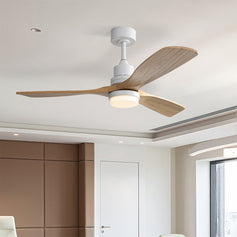
Ceiling Fans with Lights
Combine cooling and lighting with integrated LED ceiling fans designed for modern living spaces.
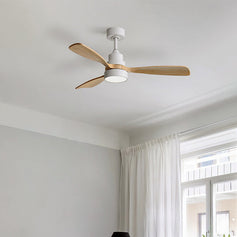
Flush Mount Ceiling Fans
Perfect for lower ceilings, flush mount fans provide comfortable airflow with a clean, low-profile design.
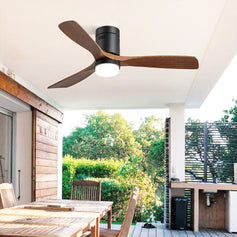
Outdoor Ceiling Fans
Designed for covered patios and outdoor living spaces with durable finishes and reliable airflow.
Quiet DC Motor Ceiling Fans
Enjoy powerful airflow with energy-efficient DC motors designed for quiet bedrooms and living spaces.
Ceiling Fan Buying Guide FAQ
1. What size ceiling fan do I need for my room?
The right ceiling fan size depends on your room dimensions and available space. Smaller rooms typically work well with 42–48 inch fans, medium-sized rooms often suit 52 inch fans, and larger rooms or open spaces may require 60 inch or larger ceiling fans for better airflow coverage.
2. How do I choose the right ceiling fan for my home?
When choosing a ceiling fan, consider your room size, ceiling height, airflow needs, design style, lighting requirements, and installation location. Factors such as motor type, blade material, and smart features can also help determine the best option for your space.
3. Are DC motor ceiling fans better than AC motor fans?
DC motor ceiling fans are popular because they typically operate more quietly, use less energy, and offer more speed settings compared with traditional AC motor fans. They are a great choice for bedrooms, living rooms, and other areas where comfort and quiet operation are important.
4. Should I choose a ceiling fan with a light?
A ceiling fan with a light is a practical choice for rooms that need both airflow and illumination. Integrated LED ceiling fans can provide adjustable brightness and color temperatures while saving space compared with installing separate lighting fixtures.
5. What is the best ceiling fan for a bedroom?
The best ceiling fans for bedrooms are typically quiet models with energy-efficient motors, comfortable airflow, and dimmable lighting options. A ceiling fan with a quiet DC motor can help create a more comfortable sleeping environment without distracting noise.
6. What is the best ceiling fan for outdoor spaces?
For outdoor areas such as covered patios, porches, pergolas, and gazebos, choose an outdoor-rated ceiling fan designed for exterior environments. Damp-rated ceiling fans are commonly used in covered outdoor spaces where they are protected from direct rain exposure.
7. What is the difference between flush mount and downrod ceiling fans?
Flush mount ceiling fans are installed closer to the ceiling and are ideal for rooms with lower ceilings. Downrod ceiling fans hang lower from the ceiling and are better suited for rooms with higher ceilings or spaces that need improved airflow distribution.
8. How high should a ceiling fan be installed from the floor?
For optimal performance and comfort, ceiling fans are generally installed with the blades positioned about 7–9 feet above the floor. The ideal height depends on ceiling height, fan design, and whether a flush mount or downrod installation is used.